Scientific Monitoring
Accompanying research ensures the success of the project and paves the way for further initiatives
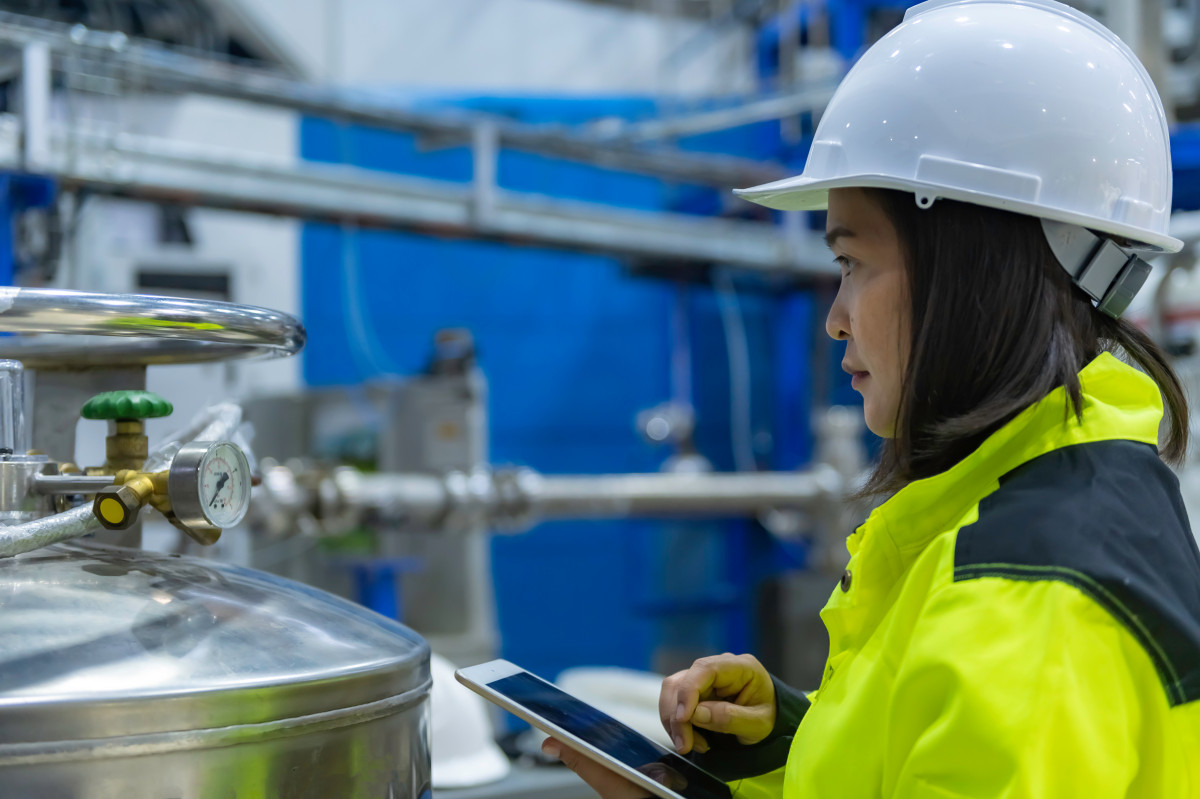
As a real-world laboratory for the energy transition, the Energiepark Bad Lauchstädt is testing technologies and processes for the production, transport, storage, and utilization of green hydrogen on an industrial scale for the first time, mapping the entire process chain. In the 7th Energy Research Program, the Federal Government supports the practical application of innovative technologies under real conditions in order to decisively advance the profound transformation of the energy system in Germany based on the insights gained. The Energiepark Bad Lauchstädt is one of five projects in the category Real-World Laboratories of the Energy Transition for Sector Coupling and Hydrogen Technologies.
The scientific monitoring of the Energiepark Bad Lauchstädt is carried out by DBI – Gas and Environmental Technology Institute gGmbH Freiberg. The research institute of the DBI Group is 100 percent owned by the German Technical and Scientific Association for Gas and Water (DVGW) and is a recognized research and development company throughout Europe. The company investigates fundamental questions in the energy and gas industry.
Research Area 1: Hydrogen Production
The interaction between wind farm and electrolysis on an industrial scale is unique with the Energiepark Bad Lauchstädt. As part of this innovation project, the practical interface between wind farm and electrolyzer is being developed and implemented by the two actors Terrawatt and Uniper. As part of the scientific monitoring, the developed solution is evaluated and examined, particularly with regard to its transferability to other use cases.
Research Area 2: Hydrogen Storage & Transport
In this second research area, the focus is on the purity of the hydrogen produced. High-purity hydrogen is obtained in the electrolyzer. During storage in the cavern storage facility, as well as during transport through the steel pipe, foreign substances can enter the gas. Since the purity of hydrogen is of great importance, particularly in industrial applications, the development of suitable measurement and treatment processes is of significant importance.
In addition to the suitability of already standardized gas treatment processes and their usability for hydrogen treatment, the project examines whether new—more efficient and cost-effective—processes for hydrogen treatment can be developed.
A particular focus is also on the repurposing of existing gas infrastructure for hydrogen transport. The pipeline used in the project has already been converted to hydrogen operation and filled with hydrogen. This tests under real conditions whether and to what extent possible residues of previously transported gases transfer into the hydrogen system. For this purpose, samples are regularly taken and analyzed. The data obtained provide important insights into material compatibility, gas quality, and the safe and efficient use of existing pipeline networks for future hydrogen transport.
Research Area 3: Marketing & Utilization
The Marketing & Utilization research area primarily deals with the application possibilities of hydrogen and the associated framework conditions. For this purpose, potential analyses are prepared in parallel with the planning and construction of the energy park to identify possible users of the hydrogen and determine their associated needs. Discussions are held with regional gas suppliers, municipalities, and also commercial operators.
Another important aspect of hydrogen utilization is determining the costs for the entire value chain and the development of a business model based on this. As part of the scientific monitoring, corresponding calculations are carried out and compared with the regulatory framework conditions.
Since these regulatory framework conditions are currently still being developed, they are scientifically evaluated in statements and thus co-designed.

Contact Person