

H2Store-flex
Research Under Real-World Conditions for Tomorrow's Hydrogen Economy
How can hydrogen be efficiently stored, transported, processed, and supplied in high quality in the future?
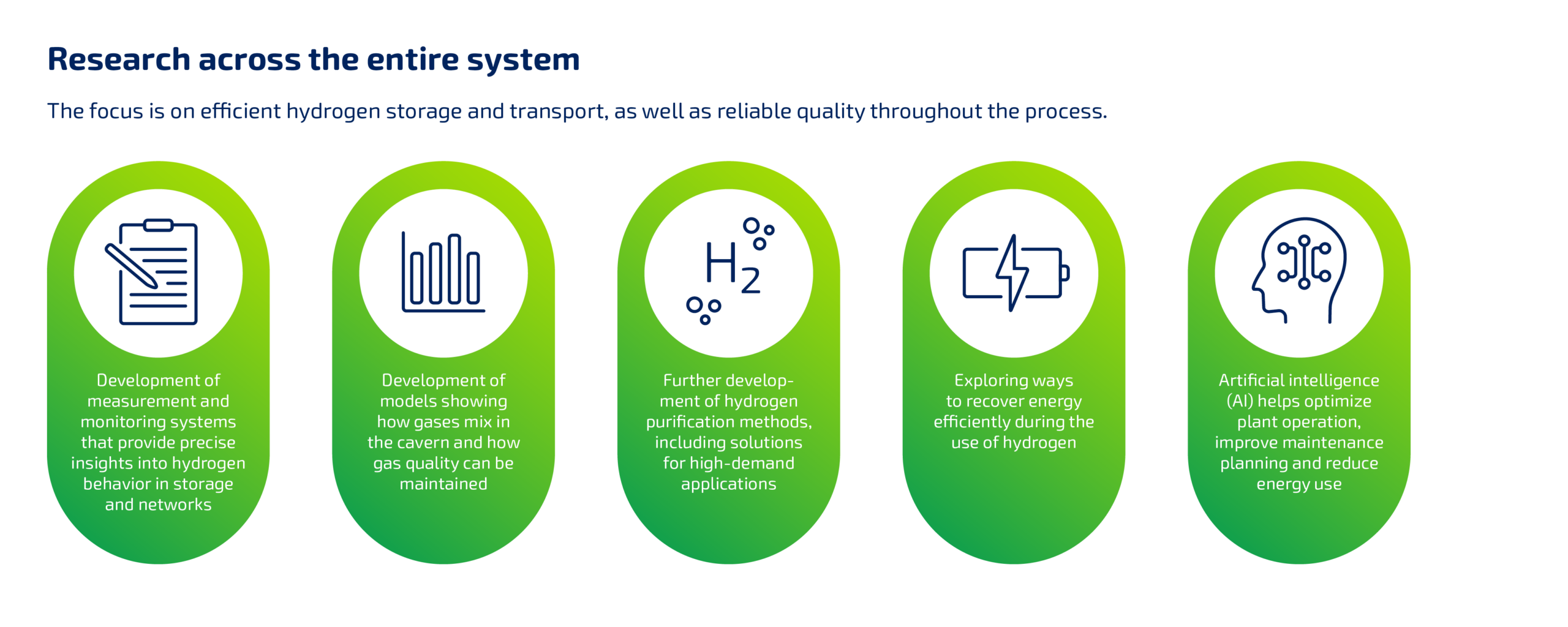
These questions are addressed by the H2Store-flex research project, which builds on the facilities already established and the insights gained at Energiepark Bad Lauchstädt. H2Store-flex views the hydrogen infrastructure as an integrated overall system. The project includes, among other things:
- Developing measurement and monitoring systems that record the behaviour of hydrogen in the grid as well as, in model form, in storage facilities over longer periods of time.
- Creating models that examine how gases mix in salt caverns and how consistently high gas quality can be ensured.
- Further developing processes for hydrogen purification to meet even the highest quality requirements of industrial applications.
- Researching ways to recover energy when using hydrogen, thereby improving overall efficiency.
Another focus is the use of artificial intelligence. In future, it is intended to help control facilities more intelligently, optimise maintenance processes and further reduce energy use.
From idea to application
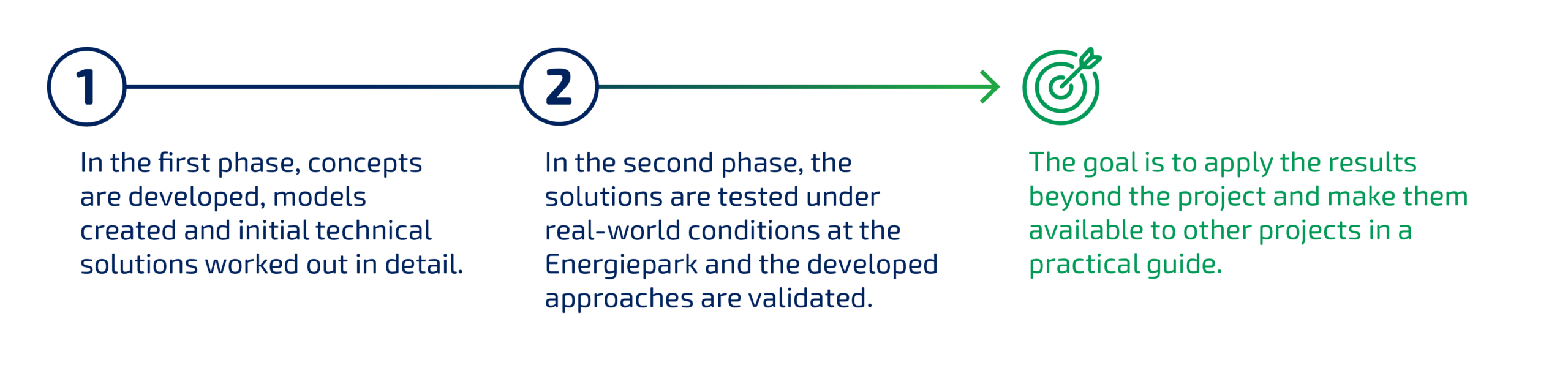
The project is divided into two phases.
In the first phase, the project partners develop scientific models, concepts and technical solutions. In the second phase, these are tested and validated at Energiepark Bad Lauchstädt under real operating conditions.
The aim is not only to further develop the project’s own technologies. The insights gained are also intended to benefit other hydrogen projects. For this reason, the results will be compiled in a practical guide and made available for future initiatives.
H2Store-flex as a building block
for the hydrogen ramp-up
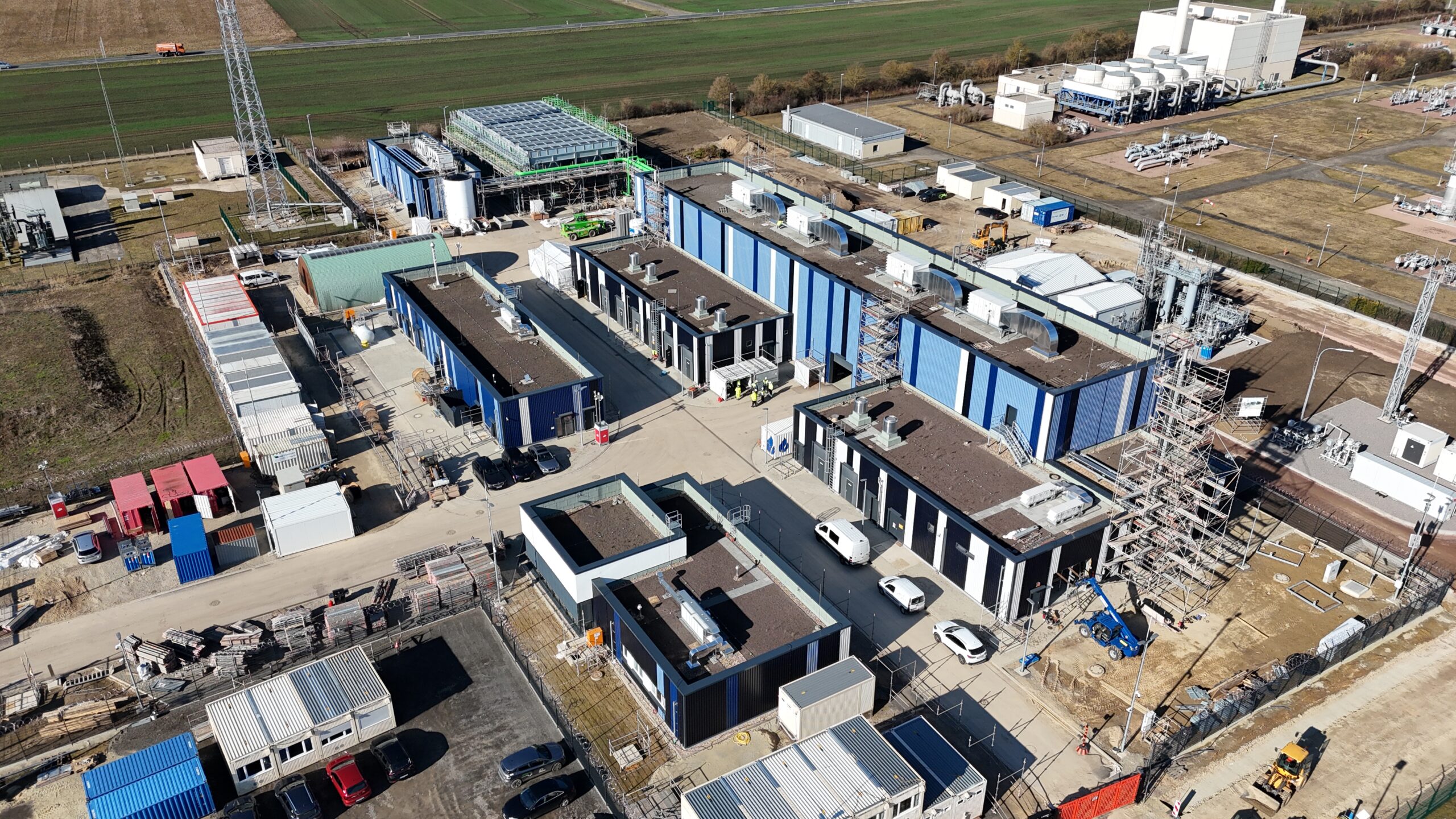
While many research projects initially develop new technologies exclusively in the laboratory or through simulations, the solutions developed in the H2Store-flex project can be tested and further developed directly within the Energiepark’s operating overall system. The existing infrastructure—from electrolysis and transport to gas treatment and storage through to industrial use—creates unique conditions for this.
This makes it possible not only to develop theoretical concepts, but also to gain robust insights into how hydrogen technologies perform under real operating conditions. These experiences form an important basis for future hydrogen projects in Germany and Europe.
With H2Store-flex, Energiepark Bad Lauchstädt will evolve beyond the original real-world laboratory into a long-term research and innovation platform for the hydrogen economy.
Contact Person
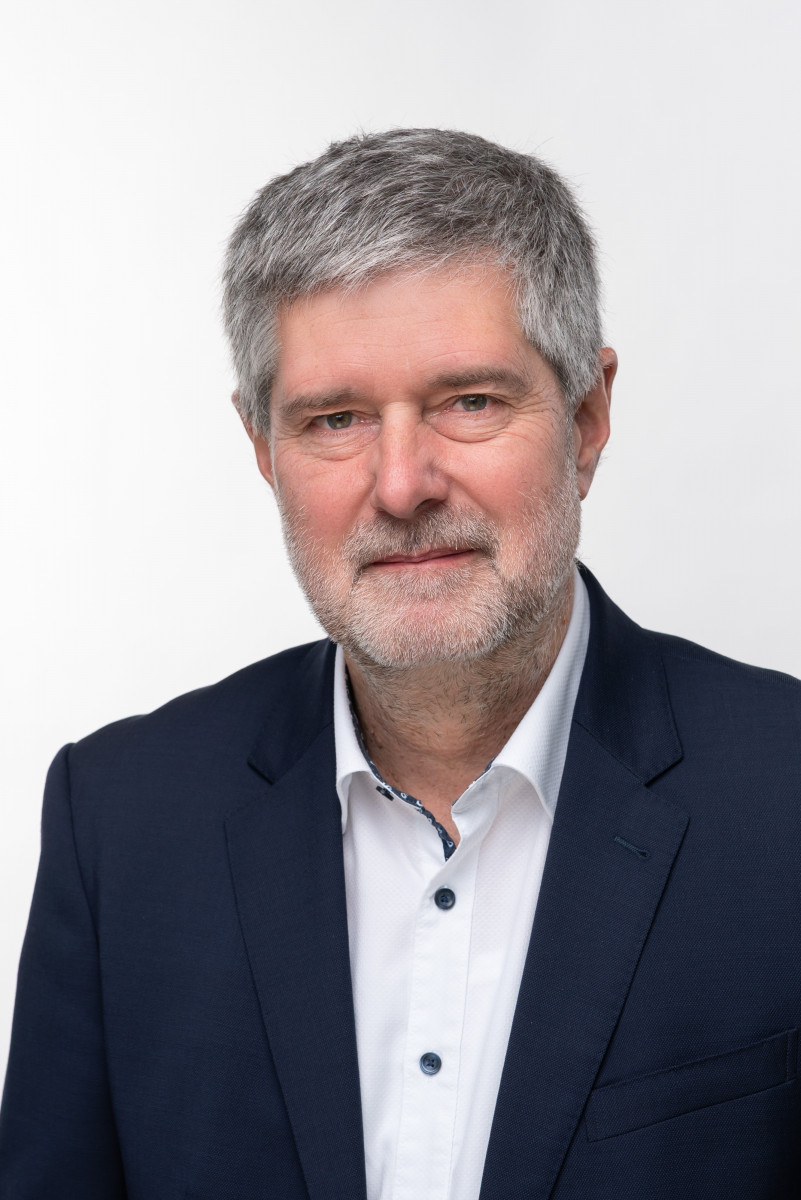
Prof. Dr. Hartmut Krause
Consortium spokesperson and Managing Director, Science & Education Division, DBI – Gastechnologisches Institut gGmbH Freiberg
Strong consortium with pooled expertise:
H2Store-flex brings together partners from research, industry and infrastructure.

The DBI – Gastechnologisches Institut Freiberg coordinates the project and is responsible for technical analyses, the measurement concept, and the development of test and demonstration systems.

The Technische Universität Bergakademie Freiberg (TUBAF) contributes its scientific expertise, particularly in modelling, thermodynamic processes and artificial intelligence.

VNG AG examines regulatory framework conditions, develops economic approaches and assesses innovative technologies within the energy system.
Associate Partners:

Terrawatt Planungsgesellschaft mbH has been developing and implementing turnkey projects in the wind power and photovoltaic sectors for 30 years. As an associate partner, Terrawatt brings its many years of experience as a planner, investor, owner, and operator to the project.

As an associated partner, the transmission system operator ONTRAS provides support, particularly on issues relating to connection to the future hydrogen core network.

As part of the Elektrolyse Mitteldeutschland (EMG) joint venture, Uniper Hydrogen GmbH, an internationally active energy company, contributes its expertise from global projects across the entire value chain to the project.

Also part of the Elektrolyse Mitteldeutschland (EMG) joint venture is VNG Handel & Vertrieb GmbH, which works on environmentally friendly energy supply in Germany and abroad through innovative products, a wide range of services and tailored concepts.

Reverion develops and builds highly efficient fuel cell power plants for generating electricity from biogas, natural gas and hydrogen, with an efficiency of up to 80%. In doing so, the systems separate pure CO₂.
In addition, the power plants can also be operated in reverse mode. In electrolysis mode, they produce green hydrogen that can be used directly or further processed together with the separated CO₂ to produce synthetic methane.
.
As a follow-on project to the real-world laboratory, H2Store-flex leverages a decisive advantage of the Energiepark: new technologies and scientific findings are not only developed here, but can also be trialled directly within the industrial overall system and validated under real operating conditions. This results in practical solutions that sustainably support the ramp-up of the hydrogen economy.
The project duration is four years. H2Store-flex is funded by the German federal government as part of the Climate and Transformation Fund (KTF).