Certification
How hydrogen becomes a verifiably green energy carrier
The abbreviation RFNBO stands for “Renewable Fuels of Non-Biological Origin” – i.e. renewable fuels of non-biological origin. Behind this is a European legal framework that specifies exactly under which conditions, for example, hydrogen is considered sustainable. In the production of RFNBO, at least 70% fewer greenhouse gases (GHG) are emitted than in the production of conventional “grey” hydrogen, and it is considered one of the building blocks for achieving the energy transition targets.
Not every green hydrogen is automatically an RFNBO. Green hydrogen initially describes sustainable production: via electrolysis using electricity from renewable energies.
RFNBO, on the other hand, describes the requirements that must be met for this hydrogen to be officially recognised as green. In addition to production from renewable energies, further criteria must be met.
Green hydrogen
Green hydrogen is produced by electrolysis, in which water is split into oxygen and hydrogen using electricity from renewable energies. Since the electricity used comes from sources such as wind or solar energy, the entire production process is free of CO₂ emissions.
Grey hydrogen
Grey hydrogen is produced from fossil energy sources such as natural gas. This produces carbon dioxide (CO₂), which is released into the atmosphere.
Why is certification so important?
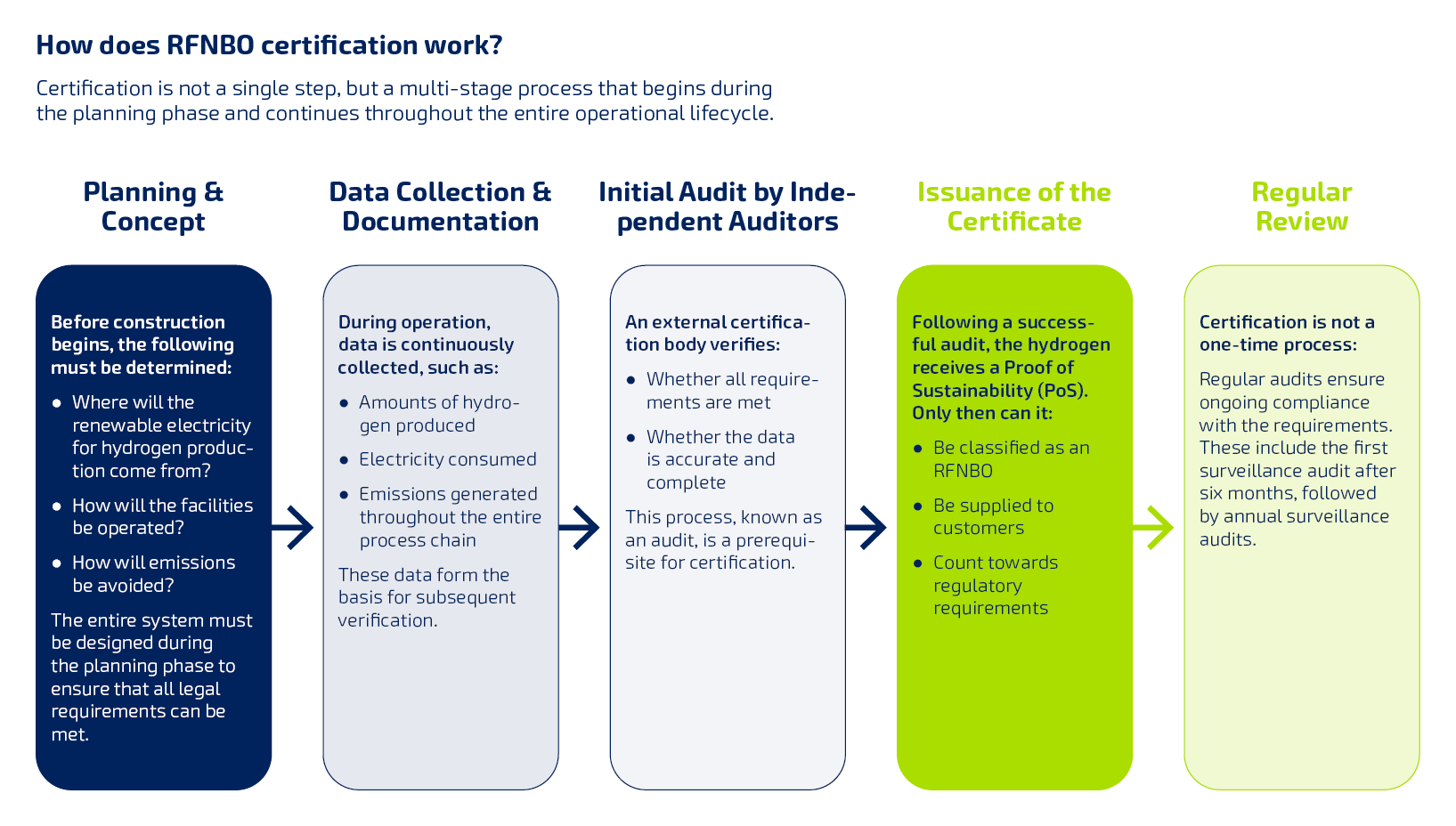
For a successful hydrogen ramp-up, it is crucial that the climate impact of green hydrogen can be reliably and transparently verified. This is precisely where RFNBO certification comes in: It ensures that the electricity used to produce hydrogen actually comes from renewable sources, that production demonstrably results in significantly fewer greenhouse gas emissions, and that every step along the value chain is transparently documented and can be independently verified.
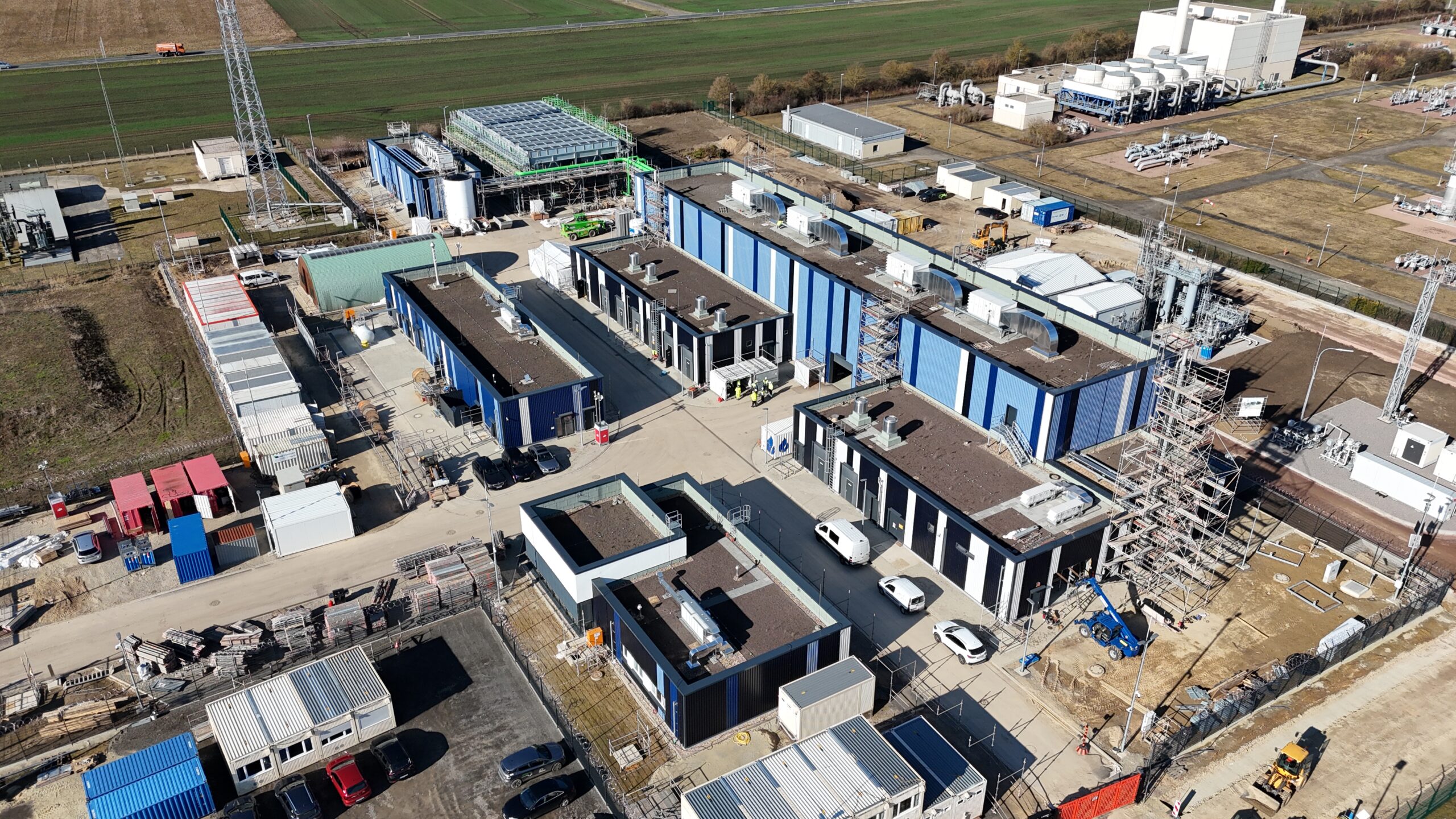
Hydrogen production at the Energiepark Bad Lauchstädt was also tested and certified accordingly. Certification thus provides an important foundation for ensuring that the hydrogen produced at the Energiepark can realize its regulatory and economic value in the market. As a result, the certified hydrogen purchased by the TotalEnergies refinery in Leuna can be counted toward statutory climate targets.
RFNBO at Energiepark Bad Lauchstädt
The Energiepark Bad Lauchstädt is RFNBO-certified. In early August 2026, the certification body GUTcert GmbH issued the certificate, thereby confirming that hydrogen production at the Energiepark meets European requirements for renewable hydrogen.
For the real-world laboratory, this certification represents an important step in the production stage of the value chain: The hydrogen produced at the Energiepark in the future can thus be officially designated as RFNBO and marketed as a sustainable product. The certificate is valid for one year and will subsequently be renewed following a recertification audit.
The certification is the result of a joint effort by Uniper and VNG Handel & Vertrieb. The interdisciplinary team prepared the process—from data collection and risk management to audit coordination—and compiled the necessary documentation. Even after certification, careful documentation remains a key component: Once production begins, consumption and production data must be continuously recorded, categorized, and made available for regular review.

Contact Person