30-megawatt electrolysis reaches important milestone – full commissioning scheduled for completion by 2027.
Bad Lauchstädt, November 10, 2026. At the Energiepark Bad Lauchstädt, Green Hydrogen has been produced in the 30-megawatt electrolysis plant for the first time. The electrolysis plant, jointly operated by Uniper and VNG Handel & Vertrieb GmbH (VNG H&V), is the heart of the hydrogen production process: it uses renewable electricity from the connected wind farm to split water into hydrogen and oxygen. The Energiepark is now entering the phase in which the components of the overall system will be tested together. This brings the planned industrial use of Green Hydrogen, set to begin in 2027, one step closer.
30 megawatts for hydrogen production
The pressurized alkaline electrolyzer consists of three modules, each with a capacity of ten megawatts. Each module comprises two so-called stacks, where the electrochemical conversion of water into hydrogen and oxygen takes place.
Construction of the large-scale electrolyzer began with the official groundbreaking in June 2023. With the first hydrogen production now underway, a decisive stage has begun on the path toward integrated operation of the Energiepark: the technical foundation for hydrogen production has been established, and the focus now shifts to the interaction with the other components of the value chain.
Dual expertise from production to marketing
Uniper and VNG H&V jointly manage the construction and operation of the large-scale electrolysis plant through their joint venture, Elektrolyse Mitteldeutschland GmbH (EMG). Uniper contributes its international experience in developing hydrogen projects along the entire value chain. With its expertise in wholesale gas trading, VNG H&V is responsible for marketing the hydrogen produced at the Energiepark, thereby supporting the development of trading and sales structures for this new energy carrier.
Konstantin von Oldenburg, Managing Director of VNG H&V, says:
“With the production of the first hydrogen, we are moving closer to our shared goal of turning renewable energy into an industrially usable energy carrier. These first hydrogen molecules are a precursor to the roughly 3,000 tons of hydrogen that our anchor customer will take delivery of and use industrially next year. The test operation now beginning is an important step in bringing the individual components together and paving the way for future supply.”
Holger Kreetz, COO of Uniper, adds:
“The hydrogen economy needs more than electrolyzers: it needs functioning connections between renewable power generation and industrial customers. That is exactly what we are working on in Bad Lauchstädt. The first hydrogen produced is an important milestone. What matters now is ensuring that the entire process chain operates reliably.”
Hans-Joachim Polk, CTO of VNG AG, which leads the consortium behind the real-world lab, puts it into context:
“The ramp-up of the hydrogen economy begins where production, infrastructure and industrial demand come together in close proximity. Such regional clusters can form the starting point for a growing hydrogen market. The Energiepark Bad Lauchstädt brings together all the key conditions needed for this. Here, we can test the interaction along the value chain in practice and gain experience that will also be valuable for the development of further regional hydrogen clusters.”
From wind farm to refinery
The Energiepark Bad Lauchstädt brings together the entire hydrogen value chain at a single site. The connected wind farm has an installed capacity of around 50 megawatts and supplies renewable electricity for the electrolysis process.
For onward transport, the project uses a roughly 25-kilometer former natural gas pipeline owned by ONTRAS Gastransport GmbH, which has been converted for hydrogen use. In the future, the hydrogen is intended to be used industrially at TotalEnergies’ refinery in Leuna. The next step is to optimize the interaction between power generation, electrolysis, gas processing and transport under real operating conditions, and to align the technical processes with one another.
With the first hydrogen production, an important technical step has thus been achieved: the overall project is moving closer to its goal of supplying Green Hydrogen on an industrial scale. Full commissioning of the integrated hydrogen system is scheduled for completion in 2027.
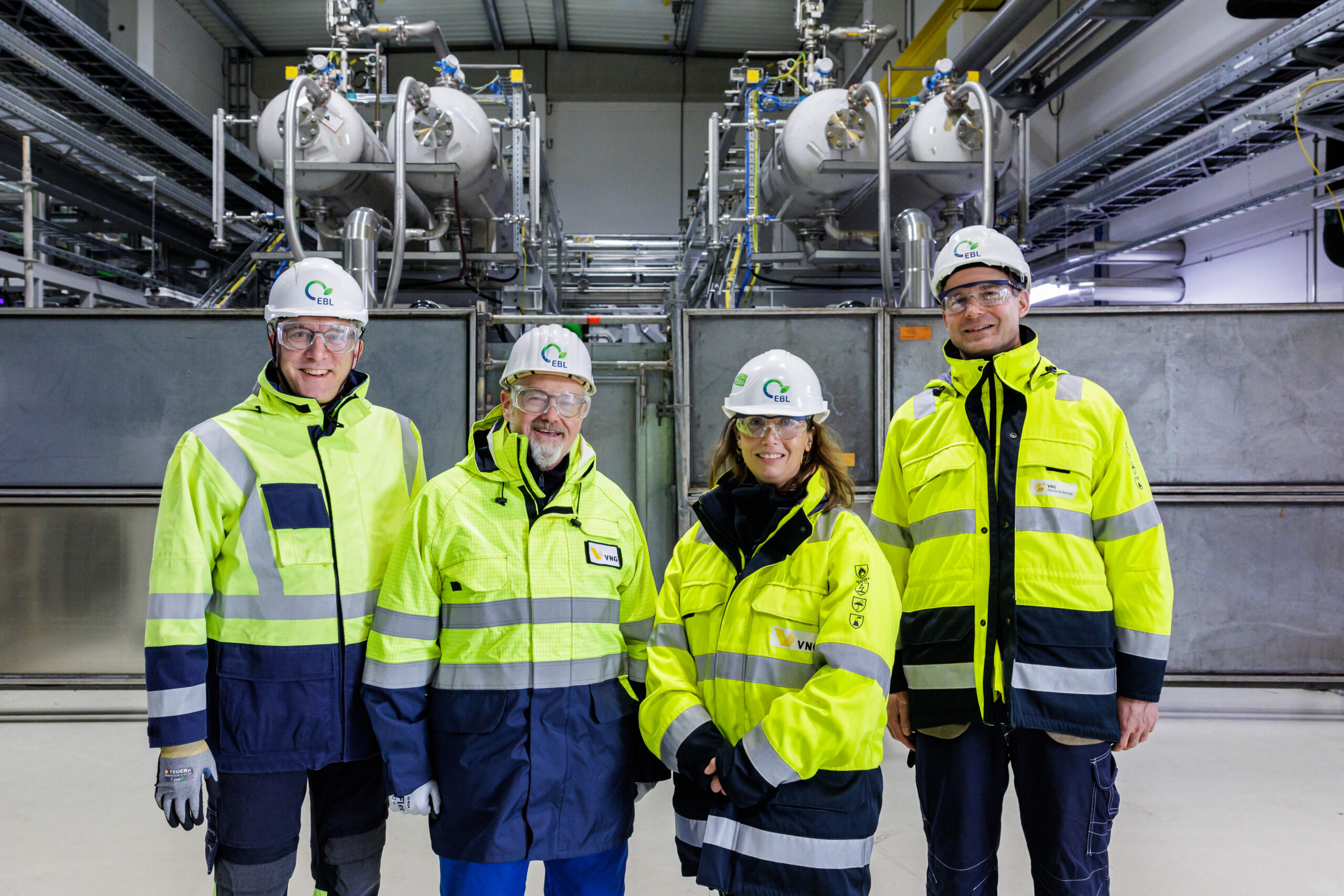
Photo: Pictured here from left to right: Dr. Holger Kreetz (COO Uniper), Hans-Joachim Polk (CTO VNG AG), Cornelia Müller-Pagel (Overall Project Manager EBL) and Konstantin von Oldenburg (Managing Director VNG Handel & Vertrieb GmbH). Photo: Jens Schlueter/Energiepark Bad Lauchstädt