
Plant passes H₂ leak test under the supervision of TÜV Thüringen and is ready for the phased ramp-up
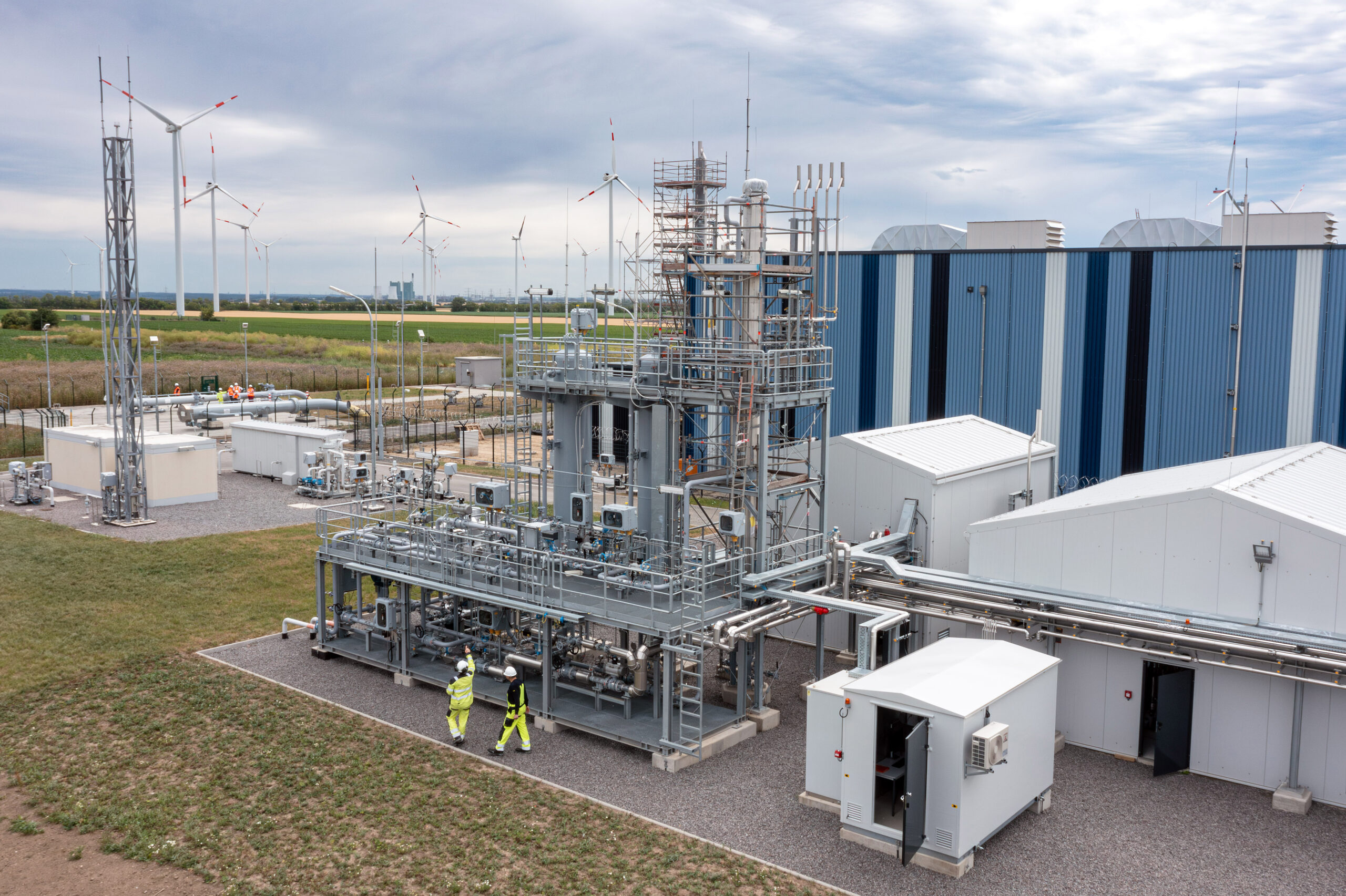
The gas processing plant of the DBI – Gastechnologisches Institut gGmbH Freiberg at the Energiepark Bad Lauchstädt has reached a key milestone. The hydrogen-carrying plant components successfully passed the H₂ leak test under the supervision of TÜV Thüringen. The plant is now ready for the phased ramp-up and can begin its primary role within the energy park.
Within the energy park’s overall system, the gas processing plant forms the link between production, transport and use – and, in the future, storage as well. The hydrogen is supplied by a 30-megawatt electrolyser powered by renewable electricity from the neighbouring wind farm. It is transported via a pipeline around 25 kilometres long to the TotalEnergies refinery in Leuna. Along the way—during transport, intermediate storage and in contact with technical equipment—hydrogen can pick up traces of water, sulphur compounds or hydrocarbons. Even the tiniest impurities in the parts-per-million range can be critical for many industrial applications. While many hydrogen projects focus on production, transport or storage, a particular focus at the Energiepark Bad Lauchstädt is the gas processing plant: it will ensure quality at the handover point—and do so at industrial scale rather than in the lab.
“The energy park maps the entire value chain from production to use. Gas processing ensures that, in the end, the hydrogen reaches the quality the industry needs. With this milestone, industrial green hydrogen production, through the interaction of all process stages, moves another step closer,” says Prof. Hartmut Krause, Managing Director for Science & Education at DBI – Gastechnologisches Institut gGmbH Freiberg and spokesperson for the Energiepark Bad Lauchstädt.
Highest purity, efficiently processed
The gas processing plant ensures that even the smallest impurities are reliably removed from the hydrogen and that its quality can be monitored at all times. To achieve this, it combines several modern processing methods. Particularly innovative is the hydrogen drying: instead of thermally regenerating the drying agent as usual with high energy input, i.e. distilling it, it is reconditioned using a special membrane technology at significantly lower operating temperatures. This reduces energy consumption, extends the service life of the drying agent and avoids additional emissions. After processing, the hydrogen thus reaches the highest defined quality level under the DVGW G 260 code (Group D) – with a purity of 99.97%. The plant can flexibly process both smaller and large quantities of hydrogen of up to 12,000 standard cubic metres per hour.
“At industrial scale, we can show how moisture, sulphur compounds and hydrocarbons are removed from hydrogen and how quality is monitored online,” Krause reports. “This is an important step towards ensuring quality assurance in future hydrogen networks and storage facilities in a practical, cost-effective and environmentally friendly way.”
Phased ramp-up
DBI – Gastechnologisches Institut gGmbH Freiberg is deliberately commissioning operations step by step. First, the plant is ramped up under nitrogen, then with hydrogen from electrolysis as soon as it is continuously available. The first hydrogen production is expected later this year. In parallel with gas processing, technical testing and leak-tightness inspections of the electrolysis stacks are under way at the energy park. As a real-world laboratory, the energy park is testing many processes for the first time under real conditions, generating insights for the broader hydrogen ramp-up.
Image 1: The gas processing plant of DBI – Gastechnologisches Institut gGmbH Freiberg at the Energiepark Bad Lauchstädt has been commissioned.
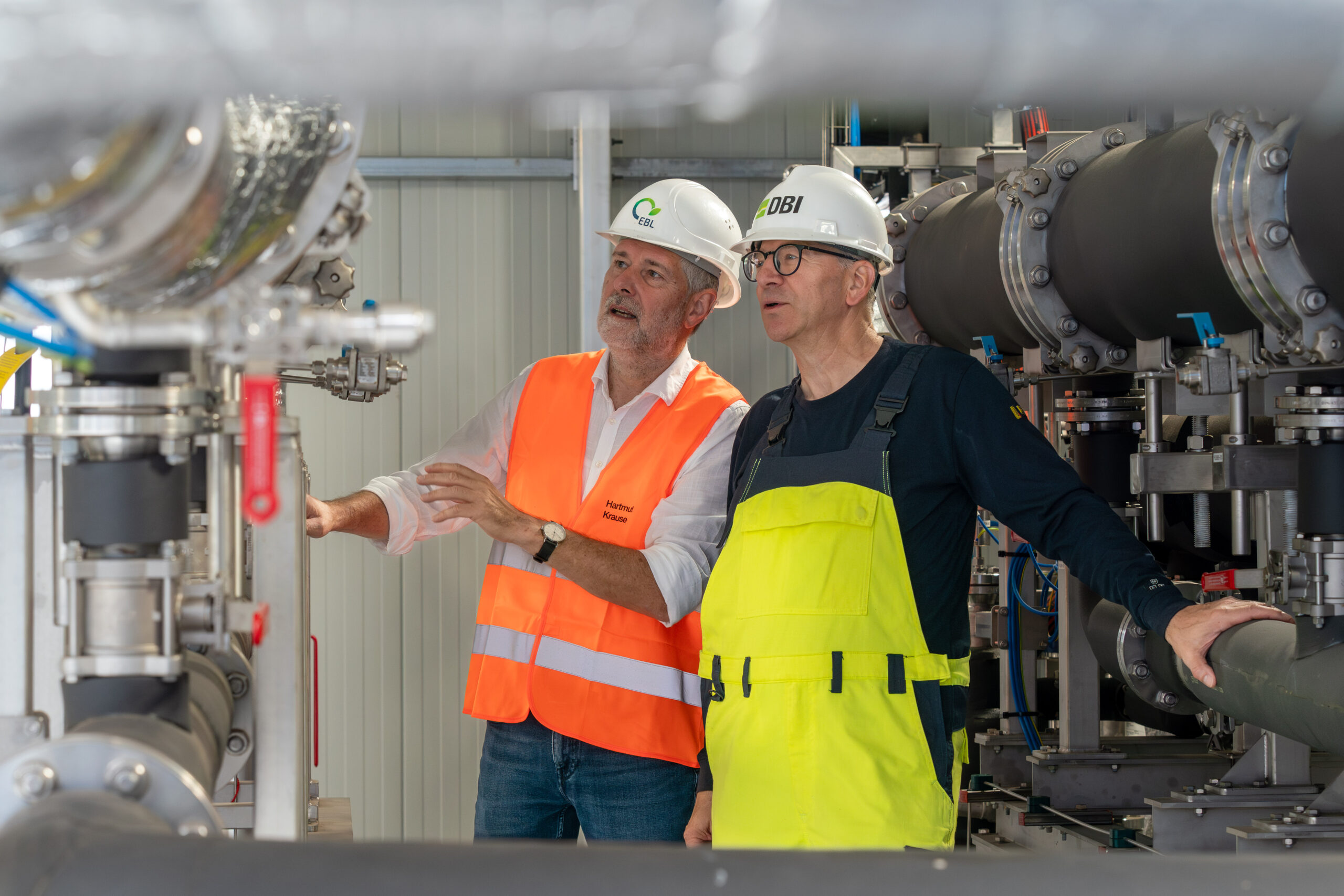
Image 2: Prof. Dr. Hartmut Krause, Managing Director for Science & Education at DBI – Gastechnologisches Institut gGmbH Freiberg and spokesperson for the Energiepark Bad Lauchstädt, and Udo Lubenau, Head of Department for Gas Chemistry/Gas Processing at DBI – Gastechnologisches Institut gGmbH Freiberg, in the gas processing plant.
© Photos: Tom Schulze