
First Electrolysis Stacks for the Production of Climate-Neutral Hydrogen on an Industrial Scale Have Arrived
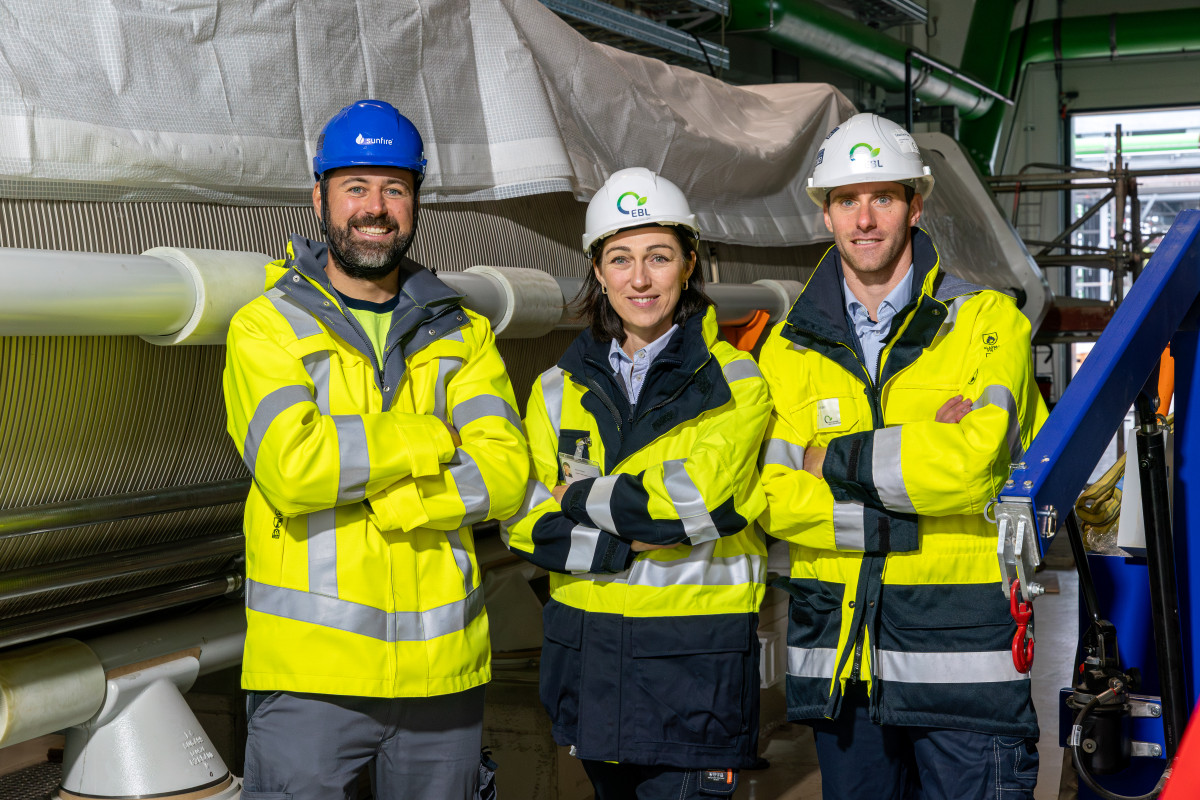
With the arrival of the first stacks, assembly of the electrolyzer has begun at the Energiepark Bad Lauchstädt; Uniper and VNG Handel & Vertrieb GmbH (VNG H&V) are responsible for its construction. It is the heart of hydrogen production and the final piece of the puzzle that paves the way for green H2 production in Bad Lauchstädt. Here, climate-neutral hydrogen is produced from wind power and water—an energy carrier that can be stored and used flexibly. It is precisely this sector coupling that is the key to the energy transition.
Once assembly is complete, commissioning will begin. “For the project team, this is an emotional moment that shows just how far we’ve come. After commissioning, green hydrogen will be produced here on an industrial scale for the first time—up to 4,000 metric tons annually,” explains Cornelia Müller-Pagel, spokesperson for the Energiepark Bad Lauchstädt consortium. “In doing so, we are making an important contribution to supplying the Central German Chemical Triangle. Above all, however, the Energiepark demonstrates that hydrogen projects in Germany are not only technically feasible but also economically viable—and can thus become a cornerstone of the energy transition.”
From the electrolysis stack to a large-scale modular plant
The pressurized alkali electrolyzer at the Energiepark Bad Lauchstädt, developed and manufactured by the Dresden-based specialist Sunfire, consists of three modules, each with a capacity of 10 megawatts. Each module consists of two stacks, with each stack in turn comprising four blocks. The 12-metric-ton electrolysis blocks are being delivered in 24 separate shipments, which are then transported to the site via flatbed trucks and assembled on-site. “The stacks are the heart of the electrolyzer. Their delivery marks the transition from the construction phase to the implementation phase and is the result of months of hard work by the entire team,” said Xenia Papst, Senior Commercial Manager Hydrogen Germany at Uniper. “The stacks convert the renewable electricity from the wind turbines in the energy park into hydrogen—efficiently, modularly, and scalably. With each additional stack, the plant’s capacity grows until we finally reach 30 MW and can connect the central component to the grid.”
Aron Guttowski, Senior Manager of Project Management for Electrolysis at Sunfire, adds: “A real-world laboratory like this demonstrates just how valuable collaboration with strong partners is. Together, we pool our many years of experience and expertise in the hydrogen sector, learn from one another, and strengthen each other. At the same time, it becomes clear that hydrogen technologies, such as those being used in Bad Lauchstädt, are already working today and are ready for practical application in industry.”
A Signal for the Energy Transition and Industry
The hydrogen produced is transported to the TotalEnergies refinery—located 25 kilometers away—via a former natural gas pipeline operated by ONTRAS Gastransport GmbH—a concrete example of how fossil fuels and infrastructure can be repurposed for climate-neutral alternatives. The Energiepark Bad Lauchstädt is one of the largest pilot projects of its kind in Europe and demonstrates how renewable energy, modern electrolysis technology, and transportation solutions can be combined into a comprehensive system that paves the way for a climate-neutral economy. “With the launch of electrolysis, we are not only securing the next technological leap but also the long-term economic viability of the Energiepark,” emphasizes Sebastian Pflüger, Senior Project Manager for Hydrogen at VNG H&V. “Green hydrogen is not only produced here but also used directly on-site—this creates value chains that are attracting international attention.” For the first time, the entire green hydrogen process chain is being tested on an industrial scale at the real-world laboratory in Bad Lauchstädt—from production using renewable electricity to its use in the regional chemical industry. In this way, the project not only contributes to decarbonization but also strengthens the innovative capacity and competitiveness of Central Germany as an industrial hub. But the Energiepark Bad Lauchstädt also sends a strong signal beyond the region’s borders: It shows how ambitious climate goals can be advanced through concrete industrial implementation.
© Pictures: Tom Schulze
© Video: Oliver Lange – Goldener Schnitt Media